

Circling
Circling is a new moving image exhibition and installation, which explores the physical and emotional journeys attached to the experience of living with persistent pain. The artworks emerged from a series of workshops with participants who have a variety of chronic pain conditions, conducted over an eight-month period, that focused on the act of walking. Some of the films concern walks people take regularly, or walks they would like to take in the future. Some bear witness to the way people’s movement is affected by their pain. Some of the works contain images and words created by the participants themselves and others have a more abstract, durational quality designed to generate the effect of chronicity in the viewer. Collectively they respond to themes such as: the changing sense of scale that pain can bring, the nature of chronicity, and the complexity of walking with others.
This exhibition is the culmination of a collaborative fellowship awarded to Anna Macdonald and Ceri Morgan by Keele’s Institute of Liberal Arts and Sciences (2018-19). The Fellowship explored new participatory arts methods, which brought together geopoetics, somatics and moving image practice. In 2019-20, the Keele Institute for Social Inclusion awarded funding to develop the work further to focus on the relationship between chronicity, pain and hope in collaboration with bioethicist, Anthony Wrigley.
This exhibition is the culmination of a collaborative fellowship awarded to Anna Macdonald and Ceri Morgan by Keele’s Institute of Liberal Arts and Sciences (2018-19). The Fellowship explored new participatory arts methods, which brought together geopoetics, somatics and moving image practice. In 2019-20, the Keele Institute for Social Inclusion awarded funding to develop the work further to focus on the relationship between chronicity, pain and hope in collaboration with bioethicist, Anthony Wrigley.
Circling
Some of the films concern walks people take regularly, or walks they would like to take in the future. Some bear witness to the way people’s movement is affected by their pain. Some of the works contain images and words created by the participants themselves and others have a more abstract, durational quality designed to generate the effect of chronicity in the viewer. Collectively they respond to themes such as: the changing sense of scale that pain can bring, the nature of chronicity, and the complexity of walking with others.
Reasonable Adjustments
Performers: John Mills and Sophie Powell
Camera: Calum Smail
Sound: Du Bist Die Ruh by Franz Schubert, performed by Takashi Sato
Participants in the project spoke about the endless adjustments, and tiring dynamic planning, that moving with pain requires. This film responds to the creativity shown by participants as they adapt continuously to their changing environments and capacities. Drawing on Miranda Pennell’s highly influential work, You made me love you (2004) it shows the participants trying to stay in the frame of a camera that moves playfully away from them. Sometimes they adjust – sometimes they refuse. The film has a quality of responsivity: the intensely present quality of a body seen reacting to events as they unfold in time.
Holding
Performer: Carla Jarrett
Camera: Luke Margetts
Carla drew an image of a balloon in
one of the workshops with a pin held near it. I brought in a large bunch of
blue balloons and there was a storm the day we filmed her holding them. Carla
also brought in a large ball of red wool and bound it round her foot. She said
it felt warm and comforting to feel her foot held by the thread.
Holding
Signs of Life
Bird's Eye View
Because Stromovka is such a large park, a good way to get an idea of its scope is to get a bird's eye view using a drone.Stromovka in detail
Drilling down into one of Prague's finest parks
_Gartenwirtschaft_im_Stromovka-Park.jpg)
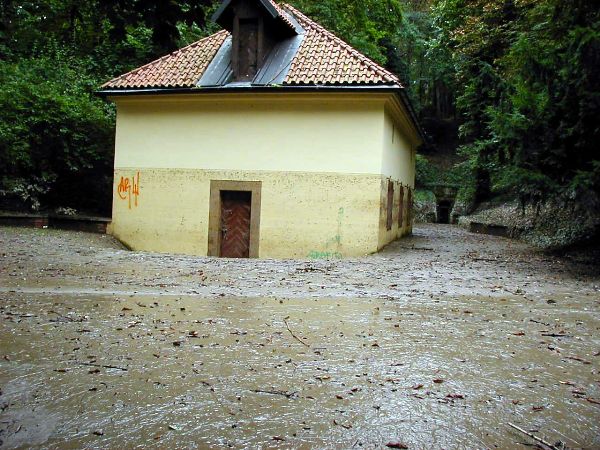
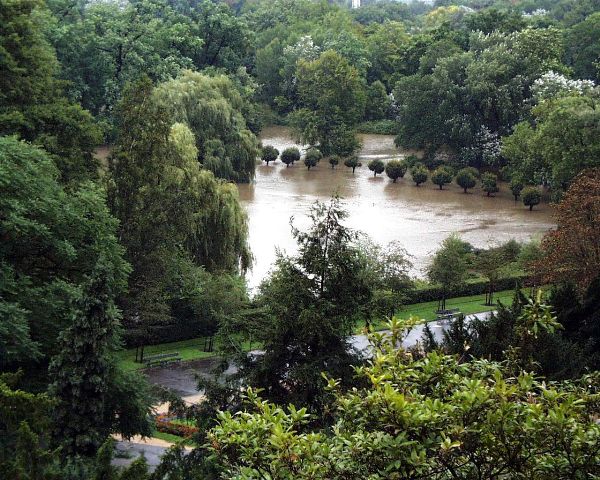
The Royal Game Park is situated next to Výstaviště Holešovice between the streets Za Elektrárnou and Nad Královskou oborou and a blind arm of the Vltava River called Malá říčka (Small River). Its area changed in various time periods and at present it spreads on the area of 95 ha. The game park was founded during the reign of Ottokar II of Bohemia (Přemysl Otakar II.) who had it enclosed as a game park and built the Summerhouse. During the Hussite period it was damaged, but during the reign of Vladislaus II of Bohemia and Hungary (Vladislav Jagellonský) it was renewed again. Since the Hussite period the game park was made accessible to the public on the saint’s day of St. Gotthard. The measurement of the game park is documented in the year 1536, at that time it was approximately 86 ha (1500 x 1000 footsteps). Ferdinand I of Austria had it extended and connected directly by the direct way to the Prague Castle between 1536 and 1548. A pound was established, the trees brought from Šárka were planted and continuously two parts were created: the eastern game park with the Summerhouse was separated by a wall from the western peasantry and gamekeeper’s lodge, which later became a fruit garden. In the times of Rudolph II, the place enjoyed its main heyday. The Summerhouse at the slope was remodeled in the Renaissance style, the game park was extended and a large – today no existing – pond was expanded to 21 ha and an island in the middle of it was founded.
Its most important remnant till today is the Oak Hillock (Dubový pahorek), which is a raised island of the former pond where mighty well-preserved oaks grow. In the years between 1582 and 1593 a unique work was created in order to supply the pound with water from the Vltava River: the Rudolph’s Adit (Rudolfova štola). Although the Great Pound was later filled, the Rudolph’s Adit of the length 1102 m brings water from the Pichl’s house at the Štefánikův Bridge through a tunnel under Letná all the way to Stromovka, where the adit entrance is mounted with a Renaissance portal with the date 1583 and initials of Rudolph II. In the first half of the 18th century, the game park became several times a military camp, which had disastrous consequences. It was so damaged that its winding up was considered. Thanks to Count Kinsky’s care it was finally renewed, thus festivities during the coronation of Francis I (František I.) could be held there. His imperial decree from the year 1804 definitely confirmed its accessibility to the public and since that time the effort to change the game park into a large landscape park in English style has been dated. After 1850, a tree garden (Baumgarten in German language) was founded and that is probably the reason why the park is called Stromovka. However, the game breeding was not restored; the parterres were created as well as ornamental flower beds, pools and fountains. In addition, the sculpture decorations were mounted. The wall separating the fruit garden and the game park was removed.
Strolling among the oaks
Stromovka is a great place to take pets out for a walk.Crocuses in bloom
They're one of the first to blossom in the parkRosie in her element
Oak trees and ponds
Stromovka park is crisscrossed by waterSkating
When the weather's cold enough, the ponds freeze and people turn out to skate
Bearings
it makes me feel like I am lost at sea